2026 Best Electric SUV Features and Buyer Insights?
The electric SUV market is experiencing exponential growth, with industry projections indicating a compound annual growth rate of 25% through 2026. As more consumers prioritize sustainability, the demand for electric SUVs is rising significantly. This shift is evident in recent consumer surveys, revealing that 45% of potential buyers consider electric SUVs as their next vehicle choice.
Brands are responding with innovative features designed to enhance the driving experience. Advanced safety systems, extended battery life, and smart, connected technology are transforming the landscape. However, several challenges remain. Many buyers still express concerns regarding charging infrastructure and vehicle range. This indicates a gap between consumer expectations and market readiness.
Understanding these dynamics is crucial for both manufacturers and consumers. As we delve into the best electric SUV features for 2026, it’s important to consider expert insights and buyer preferences. The future of mobility hinges on addressing these concerns, ensuring that electric SUVs are not only trendy but also reliable and efficient.
2026 Electric SUV Market Overview: Trends and Predictions
The 2026 electric SUV market is poised for significant growth. As consumers shift their preferences toward sustainability, manufacturers are responding with innovative designs and advanced technologies. Battery efficiency and range are central to these new models. Many electric SUVs will feature longer ranges, potentially exceeding 400 miles on a single charge. This promises convenience for drivers who may feel hesitant about range anxiety.
Trends indicate a rise in smart technologies integrated into electric SUVs. Features like advanced driver-assistance systems and seamless connectivity are becoming the norm. However, many consumers still struggle with the learning curve of these technologies. There's a need for better education on how to fully utilize these innovations. Additionally, while prices are expected to see a downward trend, affordability remains a concern for many potential buyers.
Sustainability practices are also at the forefront. More manufacturers are focusing on eco-friendly materials in their designs. Yet, the industry faces challenges regarding the sourcing of these materials. Transparency in supply chains is still a work in progress. Understanding these complexities can help consumers make informed decisions. Buyers are looking for vehicles that not only meet their needs but align with their values.
Key Features of 2026 Electric SUVs: Performance and Technology
As we look ahead to 2026, electric SUVs continue to evolve, offering impressive performance and cutting-edge technology. Data from the International Energy Agency (IEA) indicates that global electric vehicle (EV) sales are expected to increase significantly. By 2026, about 30% of all vehicles sold in key markets may be electric. This growth highlights a shift in consumer preference towards sustainability and eco-friendliness.
Key features in the latest electric SUVs include enhanced battery efficiency and real-time connectivity. Many models are expected to achieve ranges over 300 miles on a single charge, alleviating range anxiety for many drivers. Technology advancements will likely include over-the-air updates, improving software performance without a dealership visit. These advancements indicate a promising trajectory for the industry.
**Tip:** When considering an electric SUV, evaluate charging infrastructure in your area. The availability of fast charging stations can significantly enhance your ownership experience.
Another key aspect to keep in mind is performance. Many electric SUVs now feature instantaneous torque delivery, allowing for a thrilling driving experience. However, some models may lack traditional handling dynamics, a point that requires thoughtful consideration from consumers.
**Tip:** Research third-party reviews to get a sense of real-world performance. This can provide insights beyond manufacturer claims.
2026 Best Electric SUV Features and Buyer Insights
| Feature |
Specification |
| Battery Range |
300 - 400 miles |
| 0-60 mph Acceleration |
3.5 - 5.5 seconds |
| Charging Time (Fast Charger) |
30 - 45 minutes (80%) |
| Infotainment System |
10-15 inch touchscreen, Connected services |
| Safety Features |
Adaptive Cruise Control, Lane Keep Assist, Automated Emergency Braking |
| Cargo Space |
25 - 35 cubic feet |
| Towing Capacity |
2000 - 5000 lbs |
| Price Range |
$40,000 - $80,000 |
Consumer Preferences: What Electric SUV Buyers Want in 2026
In 2026, electric SUV buyers are looking for specific features that enhance their driving experience. Research indicates that 70% of consumers prioritize range and battery efficiency. They prefer SUVs that can travel over 300 miles on a single charge. Fast charging capabilities are equally important, with 65% wanting charging times under 30 minutes. These insights reflect a growing demand for practicality in electric vehicle use.
Safety is another key consideration for buyers. Data shows that around 80% of electric SUV shoppers value advanced safety features. These include adaptive cruise control, lane-keeping assist, and automatic emergency braking. However, the prevalence of these safety technologies often varies significantly across models. Buyers remain frustrated when their expectations aren't met.
Interior quality and technology play crucial roles too. Nearly 75% of consumers seek premium materials and intuitive infotainment systems. Voice command features are in high demand, yet many users report they can be unreliable. The desire for a modern, tech-savvy interior often clashes with real-world performance issues. Buyers want seamless integration of smartphone systems. However, a gap exists between consumer desires and what models deliver.
Comparative Analysis: 2026 Electric SUVs vs. Traditional Gas Vehicles
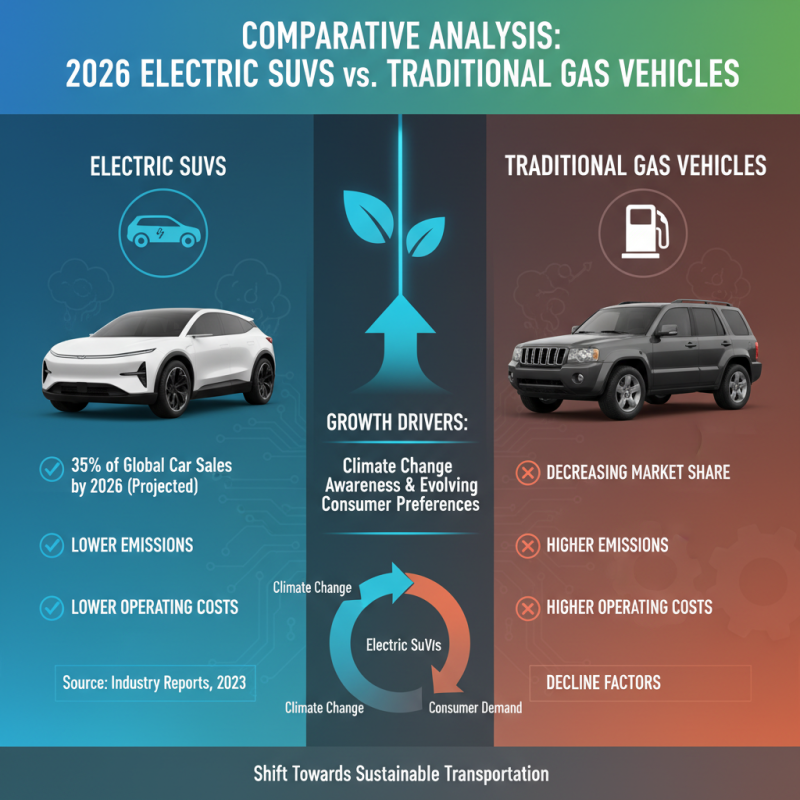
The shift towards electric SUVs is evident in the automotive market. According to recent industry reports, electric vehicles (EVs) are expected to account for 35% of global car sales by 2026. This growth reflects evolving consumer preferences and increased awareness of climate change. Electric SUVs offer significant advantages over traditional gas vehicles, including lower emissions and lower overall operating costs.
Battery performance continues to improve rapidly, with many electric SUVs boasting ranges that exceed 300 miles on a single charge. This is comparable to many gasoline models, making range anxiety a fading concern for many buyers. However, charging infrastructure still faces challenges. In some regions, public charging stations remain limited, causing inconvenience for potential EV owners.
Moreover, electric SUVs generally have higher upfront costs, often deterring budget-conscious consumers. Yet, long-term savings on fuel and maintenance can mitigate this initial expense. Additionally, as technology advances and economies of scale kick in, price parity with gas models is likely. This highlights the need for consumer education about the total cost of ownership, which is often less understood. Overall, the competitive landscape between electric SUVs and traditional gas vehicles is evolving rapidly, warranting continued observation.
Future Innovations: Emerging Technologies in Electric SUVs by 2026
The electric SUV market is on the brink of unprecedented innovation by 2026. Emerging technologies promise enhanced performance and user experience. According to a recent report by the International Energy Agency, the global electric vehicle market is expected to grow by over 30% annually through 2026. This surge means more options for consumers.
Battery technology is a significant focus. New solid-state batteries could allow for faster charging and increased range. These advancements could cut charging times to under 15 minutes, a major improvement compared to current lithium-ion batteries. Furthermore, research from BloombergNEF indicates that battery costs may drop by 60% by 2026, significantly affecting retail prices.
Integration of AI and IoT in electric SUVs is also noteworthy. Smart technology in vehicles can measure driver behavior. Adaptive systems will optimize battery usage based on driving patterns. However, consumer skepticism about data privacy remains a challenge. As manufacturers push forward, they must address these concerns transparently. The industry faces hurdles, but the potential for electric SUVs remains enormous. Each innovation brings hope but also reflection on ethical implications and long-term sustainability.