
Leave Your Message
In 2026, Car Shopping is no longer limited to local dealerships or familiar brands. Global buyers can compare vehicles across markets, but convenience brings extra decisions. Currency changes, shipping costs, taxes, and regional equipment differences can quickly alter a vehicle’s real price. A reliable purchase begins with verified information, not attractive online photos.
This guide explores practical strategies for researching, inspecting, financing, and transporting a vehicle responsibly. Buyers should check the VIN, service history, ownership records, safety ratings, and warranty terms. An independent inspection remains valuable, especially when the seller is overseas. Small details matter. A cold-start video, uneven tire wear, or missing maintenance invoice may reveal hidden concerns.
Local import requirements must be confirmed through official government or customs sources. Rules differ by country, and outdated advice can create expensive delays. Buyers should also use secure payment methods and keep written records of every agreement. Professional dealers, recognized inspection services, and established shipping providers offer stronger accountability, although none are completely risk-free.
No strategy guarantees a perfect purchase. Exchange rates may shift, delivery schedules may change, and a trusted seller can still provide incomplete information. That uncertainty deserves honest attention. Careful buyers leave room in their budgets, question confident claims, and avoid rushing under pressure. The strongest decision balances price, reliability, compliance, ownership costs, and personal needs. This approach helps international shoppers make informed choices with fewer surprises.
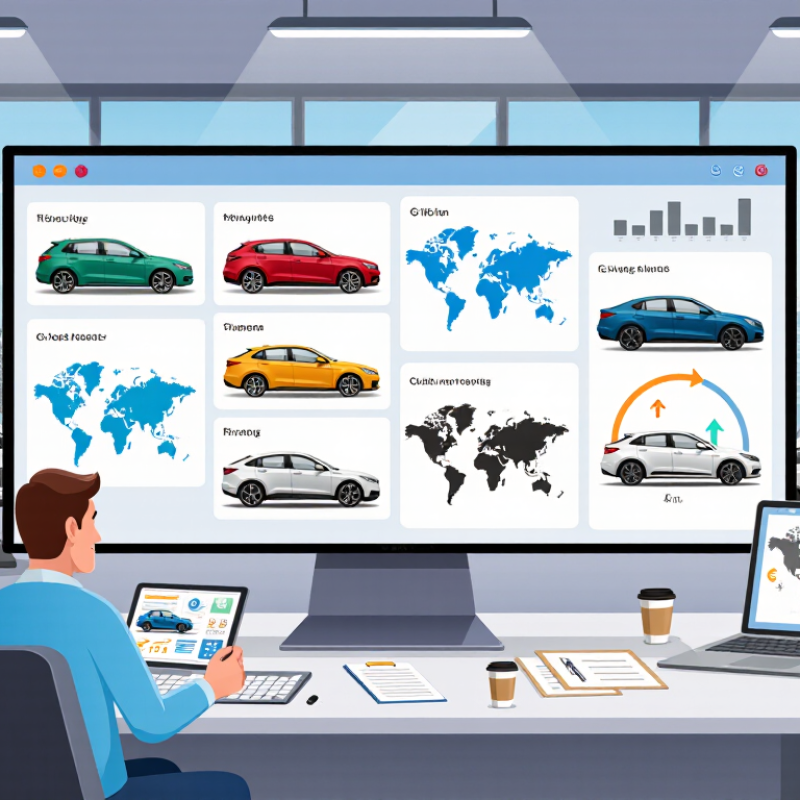
Define your car needs before browsing international listings. Write down passenger count, luggage space, road conditions, fuel type, and driving distance. A small coastal car may struggle on rural roads, while a large vehicle can create parking and shipping problems. Your target market also matters. Check steering position, charging standards, climate, service access, registration rules, and local taxes. The International Energy Agency’s Global EV Outlook 2025 reports that electric-car sales exceeded 17 million worldwide in 2024, representing more than one-fifth of new-car sales. Infrastructure differs sharply by country, however.
Tip: Build a total-cost sheet, not only a purchase-price sheet. Include shipping, insurance, customs charges, inspection, registration, maintenance, energy, and currency changes. Leave a 10–15% reserve for surprises. That reserve feels excessive until it is not. The 2025 Deloitte Global Automotive Consumer Study highlights continuing consumer sensitivity to vehicle prices, running costs, and charging convenience. Compare at least three local listings and record the date of every quote. Online prices can change quickly.
Tip: Match the vehicle to the target market’s real conditions. Confirm battery warranty coverage, spare-parts availability, repair expertise, and software compatibility through official local authorities or qualified technicians. Read independent inspection reports, and request cold-start, brake, tire, and underbody evidence. I have learned that attractive photos hide expensive details. The World Bank’s commodity outlook also shows why exchange rates and energy costs deserve attention. Recheck your budget one week before payment. Your first estimate may be wrong. That is useful information, not failure.
| Planning Dimension | Key Question | Practical Data Point or Benchmark | Target-Market Check | Recommended Buyer Action |
|---|---|---|---|---|
| Primary Use | How will the vehicle be used most often? | Classify usage as urban commuting, long-distance travel, family transport, commercial work, or mixed use. | Check road quality, congestion levels, parking availability, and common trip distances in the destination market. | Write a one-sentence use case and reject vehicles that do not meet it without major compromises. |
| Passenger and Cargo Capacity | How many people and how much luggage must fit regularly? | Use the normal passenger count rather than the maximum occasional capacity; measure cargo space with seats in the usual position. | Confirm child-seat anchorage standards, rear-seat dimensions, and local rules for passenger or goods transport. | Create a minimum requirement for seats, cargo volume, door access, and towing or payload capacity. |
| Total Purchase Budget | What is the maximum amount available before ownership costs? | Calculate the purchase price plus shipping, insurance, import duty, taxes, registration, inspection, and required equipment. | Use the destination country’s customs valuation method and confirm whether taxes are based on vehicle value, freight, insurance, or a combined amount. | Set an all-in ceiling and keep a contingency reserve for exchange-rate changes, repairs, and documentation. |
| Monthly Ownership Cost | What recurring cost can the household or business comfortably support? | Include fuel or electricity, scheduled maintenance, tires, insurance, parking, road charges, financing, and depreciation. | Compare local fuel and electricity prices, insurance-rating rules, annual circulation charges, and maintenance labor rates. | Estimate the monthly total for at least three years instead of comparing purchase prices alone. |
| Powertrain Choice | Which powertrain matches driving patterns and local infrastructure? | Compare gasoline, diesel, hybrid, plug-in hybrid, and battery-electric options using annual distance and energy cost. | Verify charging availability, connector compatibility, fuel quality, low-emission-zone rules, and local incentives or restrictions. | Select the powertrain that supports the majority of trips without relying on unavailable infrastructure. |
| Fuel or Energy Efficiency | How much energy will the vehicle consume in real use? | Compare standardized consumption figures in the same unit, then allow for traffic, weather, payload, air conditioning, and driving style. | Confirm whether the market publishes fuel economy in L/100 km, km/L, miles per gallon, or kWh/100 km. | Convert all figures to one unit and calculate annual energy cost using local prices. |
| Safety Requirements | Which safety features are essential rather than optional? | Check crash-test performance, electronic stability control, airbags, anti-lock braking, seat-belt reminders, and available driver-assistance systems. | Confirm that the safety certification is recognized by the destination authority and that assistance features operate under local road conditions. | Prioritize independently verified safety performance over appearance or infotainment features. |
| Climate and Terrain | Can the vehicle handle the destination’s environment? | Evaluate ground clearance, corrosion protection, cooling capacity, cold-weather starting, water resistance, and traction needs. | Review temperature ranges, seasonal flooding, snow or desert conditions, mountain roads, and road-salt exposure. | Match tires, underbody protection, climate control, and service intervals to local conditions. |
| Regulatory Compatibility | Can the vehicle legally be imported, registered, and operated? | Check emissions, noise, lighting, glass, steering position, speedometer units, vehicle age, and inspection requirements. | Obtain written confirmation from the destination registration or customs authority before making payment. | Verify legal eligibility using the vehicle identification number and official import rules. |
| Import and Delivery Risk | What could delay or increase the delivered cost? | Allow for port handling, inland transport, customs clearance, inspection appointments, storage charges, and document corrections. | Confirm required documents such as invoice, title, export certificate, conformity evidence, insurance papers, and customs forms. | Use a written landed-cost worksheet and identify who is responsible for each shipping and customs step. |
| Service and Parts Access | Where will routine maintenance and repairs be performed? | Confirm access to qualified technicians, diagnostic tools, replacement parts, tires, body repairs, and software updates. | Check whether imported specifications differ from vehicles already supported in the destination market. | Obtain local service estimates and price critical replacement parts before purchase. |
| Ownership Horizon | How long will the vehicle be kept? | A short ownership period emphasizes resale liquidity, while a longer period emphasizes reliability, corrosion protection, and long-term service cost. | Assess local demand for the vehicle’s body style, powertrain, steering position, age, and transmission type. | Estimate total cost over the planned holding period, including expected resale value and transaction costs. |
| Final Comparison Method | How can different vehicles be compared fairly? | Score each candidate for need fit, all-in cost, regulation, safety, efficiency, service access, and resale practicality. | Use the same currency, tax assumptions, exchange-rate date, annual mileage, and ownership period for every candidate. | Choose the vehicle with the strongest overall fit, not simply the lowest advertised price. |