Choosing the right All Electric SUV is no longer a simple question of range. Global buyers must weigh charging access, climate, road quality, ownership costs, safety, and local support. A model that feels practical in Norway may feel restrictive in rural Australia or crowded Indian cities.
Carlos Tavares, former Stellantis chief executive and a respected automotive industry leader, once said, “The electrification of the automotive industry is a technology push, not a market pull.” His warning remains useful. Electric adoption is growing, but buyers still need evidence, not excitement alone. This guide examines seven All Electric SUV models through real-world criteria, including usable driving range, charging speed, cabin space, software reliability, warranty coverage, and safety performance.
Numbers can mislead.
A vehicle rated for 500 kilometers may deliver far less with winter heating, heavy luggage, steep roads, or sustained highway speeds. Battery size also matters less when public chargers are scarce or unreliable. We consider manufacturer specifications, independent safety results, long-term ownership reports, and regional availability where dependable information exists. Still, no global ranking can be perfect. Prices, incentives, service networks, and trim levels change between markets. Some conclusions may require a second look as battery technology and charging infrastructure improve.
These seven choices are not presented as universal winners. They are practical starting points for different drivers, families, budgets, and travel habits. The best All Electric SUV is the one that fits your daily route, local energy system, and tolerance for compromise.

A fully electric SUV uses battery power alone, with no petrol or diesel engine onboard. This distinction matters when comparing global vehicles. The International Energy Agency’s Global EV Outlook 2024 reported that electric SUV sales grew by more than 60% in 2023. Their taller bodies offer easier access, higher seating, and useful cargo space, but they usually consume more energy than smaller cars.
Range is only one measure. A credible electric SUV should provide efficient battery management, dependable thermal control, and clear charging information. The IEA notes that public charging infrastructure must expand rapidly to support growing electric vehicle adoption. Buyers should examine charging speed, connector compatibility, home electricity access, and local grid reliability. A claimed range can shrink sharply in freezing weather, heavy rain, or mountainous terrain.
Safety and usability define the better choices. Independent testing from Euro NCAP evaluates crash protection, child safety, vulnerable-road-user protection, and driver assistance performance. Software updates should be transparent, secure, and available across regions. Repair access also deserves attention, especially where trained technicians remain limited. Battery warranties help, but warranty language can be difficult to compare.
Not every large electric SUV is truly practical. Some carry oversized batteries and heavy bodies, creating avoidable resource pressure. That is an uncomfortable trade-off. Global buyers should consider passenger needs, annual mileage, climate, charging access, and lifecycle impacts before judging any model. According to the IEA, battery production and vehicle efficiency remain important factors in reducing transport emissions.
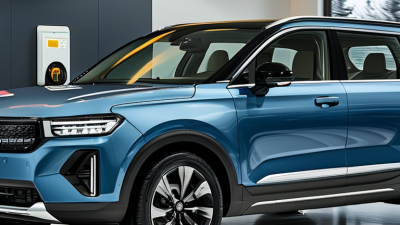
The seven best all-electric SUVs differ across major markets, because charging access, road conditions, and family habits rarely match. A compact urban SUV suits crowded European streets and limited parking. A long-range midsize model works better for Australia, Canada, and large rural regions. A three-row SUV gives growing families flexible seating and useful luggage space. It is heavy, though.
A sporty electric SUV appeals to drivers who value sharp steering and quick acceleration. A rugged model offers higher ground clearance for uneven roads, but its larger tires can reduce efficiency.
A premium SUV usually delivers quieter cabins, stronger driver assistance, and better materials. The seventh choice is a value-focused model, especially important where purchase prices and public charging fees remain high.
Real-world testing should include winter mornings, steep roads, child seats, and crowded charging stations. Range figures from laboratory cycles are helpful, not absolute. I would check the usable battery size, warranty terms, charging curve, and local service coverage before choosing. Some vehicles feel excellent during a short test drive, then disappoint after repeated highway charging. That remains an uncomfortable weakness. Safety ratings also vary by region, so buyers should consult local testing authorities. A balanced shortlist matters more than a glossy specification sheet.
The seven best all-electric SUVs for global buyers differ most in range, charging speed, and daily comfort. A compact urban model can cover 300–400 kilometres in mild conditions, while larger versions may exceed 500 kilometres. Real results change with cold weather, heavy luggage, steep roads, and highway speeds.
For everyday driving, a family-sized SUV usually offers the strongest balance. It should manage school trips, traffic, and weekend travel without feeling bulky. Fast charging matters during longer journeys. A capable system can add roughly 200–300 kilometres in 20 to 30 minutes, but only with a high-power charger and a warm battery. Charging networks remain uneven across regions. Check local connector access before buying.
The most convincing choices include a small city SUV, two practical family models, a long-range touring SUV, a fast-charging option, a rugged all-wheel-drive model, and an efficient seven-seat vehicle. Independent road tests should measure energy use, cabin temperature, and charging time, not just laboratory range. I have found that a comfortable seat and predictable controls often matter more than another 50 kilometres of claimed range. Some vehicles also charge slower after repeated highway runs. That detail is easy to miss. Buyers should leave a margin for winter, detours, and ageing battery performance. A perfect choice on paper may feel inconvenient at home.
| Vehicle | Body Format | Battery Capacity | Official Range | DC Fast-Charging Time | Maximum DC Input | 0–100 km/h | Usable Cargo Volume | Drive System | Everyday Driving Assessment |
|---|---|---|---|---|---|---|---|---|---|
| Vehicle A | Mid-size crossover | 77.4 kWh | 507 km WLTP | Approximately 18 minutes 10–80% |
Up to 240 kW | 5.3 seconds | 527 litres | Dual-motor AWD | ★★★★★ Excellent balance of range, ride comfort, cabin space, and rapid charging. |
| Vehicle B | Sporty mid-size crossover | 77.4 kWh | 528 km WLTP | Approximately 18 minutes 10–80% |
Up to 240 kW | 5.2 seconds | 490 litres | Dual-motor AWD | ★★★★★ Strong acceleration and stable high-speed performance with class-leading charging convenience. |
| Vehicle C | Family crossover | 75 kWh | 533 km WLTP | Approximately 27 minutes 10–80% |
Up to 250 kW | 5.0 seconds | 854 litres | Dual-motor AWD | ★★★★★ Highly efficient, practical, and easy to use for commuting, family trips, and long-distance travel. |
| Vehicle D | Premium mid-size SUV | 105.2 kWh | 582 km WLTP | Approximately 31 minutes 10–80% |
Up to 200 kW | 6.0 seconds | 500 litres | Dual-motor AWD | ★★★★☆ Quiet, comfortable, and spacious, with excellent motorway refinement and long-distance range. |
| Vehicle E | Large luxury SUV | 111.5 kWh | 625 km WLTP | Approximately 31 minutes 10–80% |
Up to 170 kW | 4.8 seconds | 520 litres | Dual-motor AWD | ★★★★☆ Outstanding comfort and range, although its larger dimensions may be less convenient in dense urban areas. |
| Vehicle F | Large performance SUV | 135 kWh | 505 km WLTP | Approximately 30 minutes 10–80% |
Up to 220 kW | 4.6 seconds | 835 litres | Dual-motor AWD | ★★★★☆ Exceptional passenger and cargo space with powerful towing and all-weather capability. |
| Vehicle G | Premium mid-size SUV | 88 kWh | 600 km WLTP | Approximately 31 minutes 10–80% |
Up to 170 kW | 5.8 seconds | 500 litres | Dual-motor AWD | ★★★★☆ Efficient, refined, and comfortable, with a particularly strong balance between range and premium touring ability. |
The seven best all-electric SUVs for global buyers should balance comfort, technology, safety, and useful cabin space. In real driving, quiet operation matters more than flashy acceleration. A well-tuned seat, clear outward visibility, and soft suspension reduce fatigue on long journeys. Rear passengers should have enough knee room for a two-hour trip. Some models promise five seats, yet their raised floor makes the middle position uncomfortable.
Technology should simplify driving rather than create extra tasks. A responsive central display, physical climate controls, and reliable voice commands improve daily use. Wireless phone connection is helpful, but it should not replace basic buttons. Navigation should show charging stops, estimated arrival range, and nearby alternatives. Software updates can improve the vehicle, although unstable updates may cause frustration. I would test these features in bright sunlight and weak mobile coverage.
Safety requires more than a long equipment list. Buyers should check independent crash-test results, child-seat access, braking performance, and driver-assistance behavior. Some systems feel overly cautious in city traffic. Others react too slowly on narrow roads. A practical electric SUV also needs a flat loading floor, a low lift-over height, and storage under the front hood when available. Charging speed varies by battery temperature, electricity supply, and local infrastructure. That detail is easy to overlook. Before choosing, measure the garage, test the rear seats, and inspect the warranty terms. A perfect SUV does not exist.
Choosing among the seven best all-electric SUVs requires more than comparing driving range. Pricing changes sharply after taxes, incentives, shipping, and local equipment. The International Energy Agency’s Global EV Outlook 2025 reports that electric car sales exceeded 17 million in 2024. They represented more than one-fifth of global new-car sales. Supply is growing, but availability remains uneven. Some markets offer several battery options. Others receive only imported, high-trim vehicles. Published prices may exclude home charging, winter tires, or delivery fees.
For a fair comparison, calculate five-year ownership costs. Include electricity, insurance, tires, maintenance, financing, and charger installation. BloombergNEF’s 2024 Battery Price Survey placed average lithium-ion pack prices at 115 dollars per kilowatt-hour. Prices fell 20 percent year over year. Lower battery costs may support future affordability, yet showroom prices do not fall immediately. Warranty length and battery-repair access matter more than a dramatic range figure. I would also check independent efficiency tests. Official figures can seem optimistic in cold weather, heavy rain, or motorway driving. That limitation is easy to overlook.
Tips: Compare usable battery capacity, not only advertised capacity. Ask about software support and replacement-part lead times. Confirm charging standards before crossing borders. A 150-kilowatt charger helps only when the SUV accepts that power. The International Council on Clean Transportation finds real-world efficiency varies widely across vehicles and conditions. Test rear visibility, seating comfort, and cargo space with your actual luggage. Online comparisons simplify the choice. Real life does not.